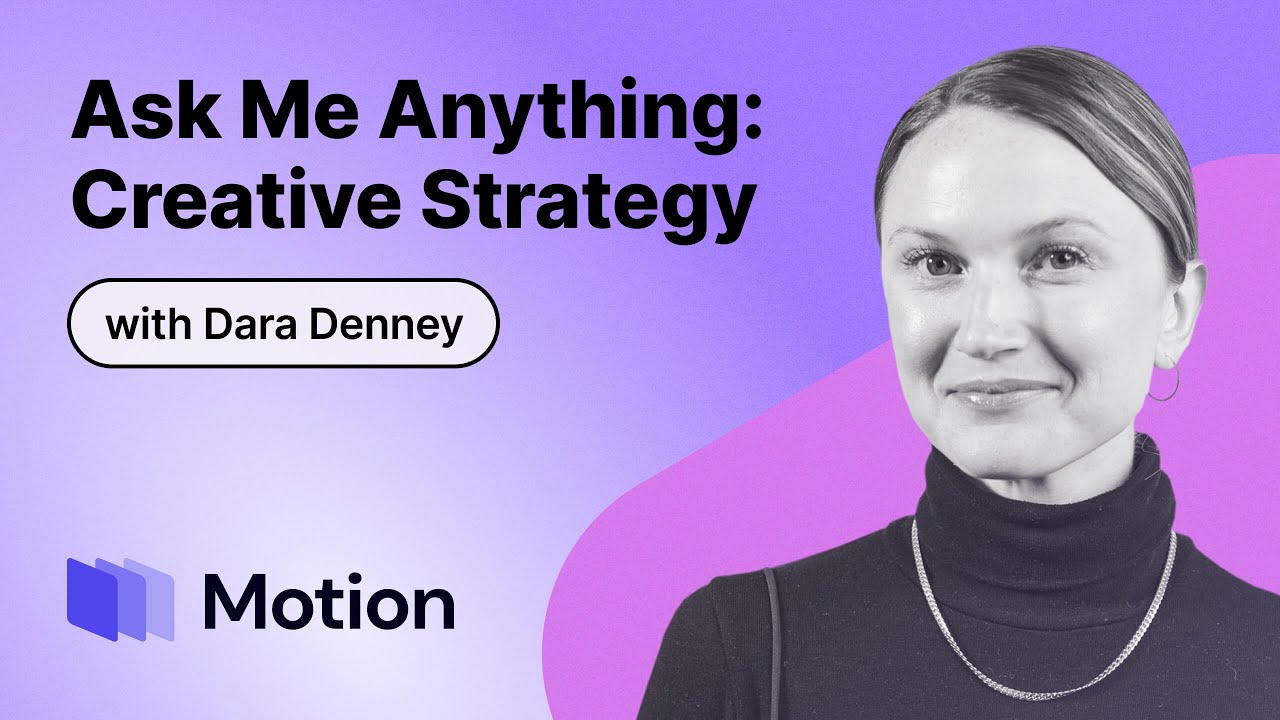
Dara Denney

Dara Denney

Performance Creative Consultant · Motion

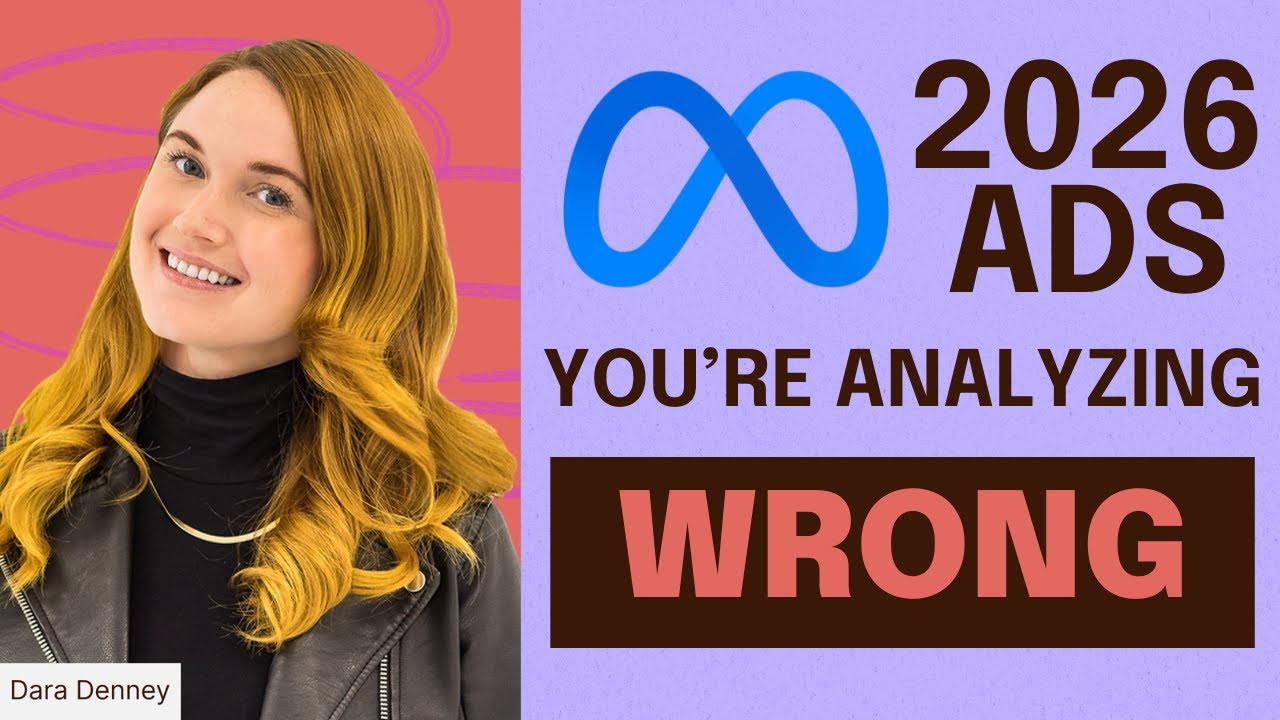
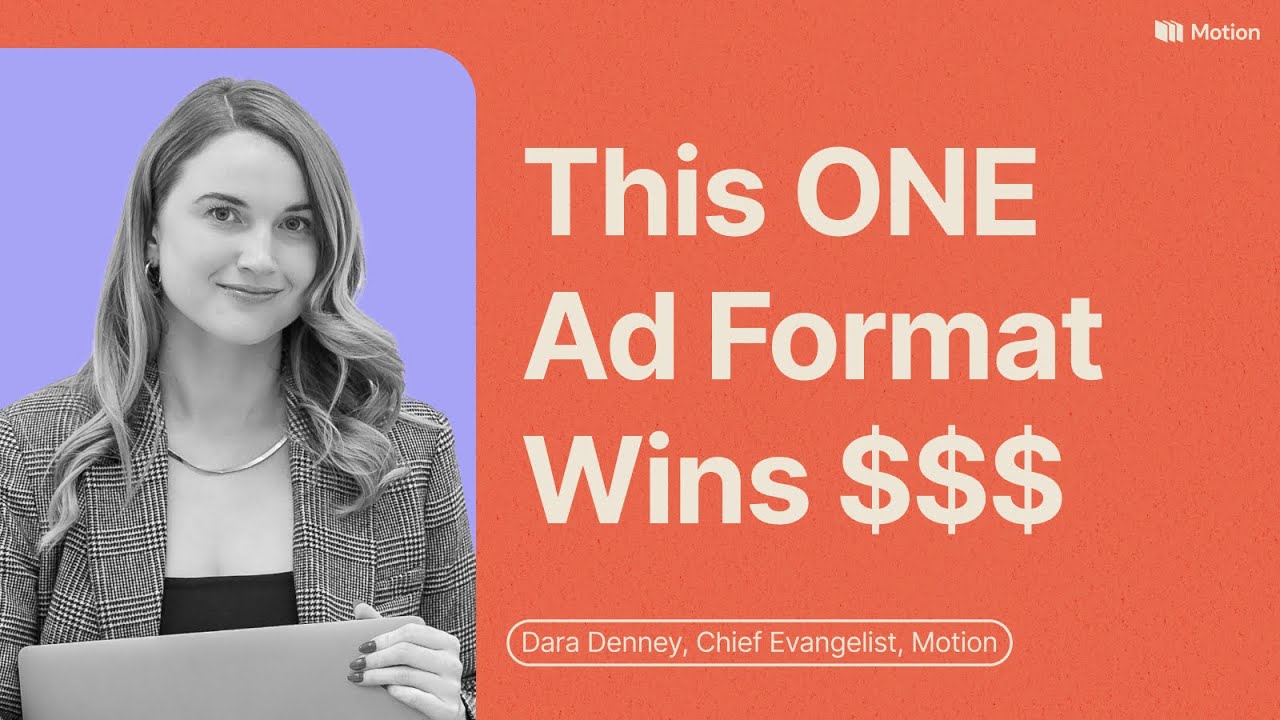
Dara Denney is Motion's Chief Evangelist and partner at boutique performance agency Point Guard Media, known for breaking down winning Meta ads with a research-first methodology that treats creative strategy as content analysis rather than metrics analysis. She built a 100K+ YouTube following teaching creative strategists the craft she helped codify — particularly the idea that creator, messaging, and persona matter more than format, and that metrics are the *least* important part of analyzing what worked.

Distinctive beliefs, repeated across talks

How Dara Denney thinks about creative strategy

01

Metrics Are The Least Important Part Of Analysis

Dara's signature contrarian take: when analyzing creative, metrics tell you which ads worked but almost nothing about why. She splits metrics into 'primary KPIs' (spend, results, CPA, ROAS) and 'storytelling KPIs' (CPM, CTR, hold rate, shares), and insists content analysis — format, creator, messaging, imagery, persona — is where the real work happens. Most strategists stop at the dashboard; she thinks that's the mistake.

"It's actually the metrics that are the least important part of this process."

"When you are analyzing the actual content of any creative, this is actually the most important part of the analysis process."

"The analysis process does not just stop at the data. You have to really drill into the content piece and compare that across different data sources."

02

Creator And Messaging Beat Format Every Time

Dara consistently argues that format is overrated as a performance driver. The creator/talent and the messaging angle matter more than whether it's a video, carousel, or static. She pushes teams to stop asking 'what format should we test?' and start asking 'who is this for and who's delivering it?' — especially because strategy angles travel cross-platform while formats are platform-specific.

"Your creator and the talent that you work with is more important candidly than the script, the arbitrary hooks that you're making."

"I don't always find that [format] is the defining thing that can actually make a creative convert or perform."

"The strategy angle is actually something that could be inserted into different formats... The format is how it's actually showing up on your individual platforms, but the strategy is really something that can go cross-platform."

03

Persona-Level Analysis Is The 2026 Unlock (Because Of Andromeda)

Dara argues Meta's Andromeda algorithm fundamentally changes what creative strategists should be doing. Andromeda groups retrieved ads by persona — not just by user — which means every creative needs to be explicitly mapped to an intended audience. She treats this as the most underdiscussed shift in performance creative, and builds persona ecosystems from customer reviews when Motion's tooling isn't available.

"What a lot of people don't talk about with Andromeda is that it's also grouping these different ads into different personas."

"Every time you're analyzing creative and you're looking at the format, the creator, the messaging, and the imagery, really think about, okay, who are we targeting with this specific creative?"

"The big thing that I think is changing in 2026 is actually how all of these fit together… all of these go into a certain persona or intended audience."

04

Underperforming Strategists Are Usually A Process Failure

Dara pushes back hard on the instinct to blame individual creative strategists when output isn't landing. She argues 9 out of 10 times it's actually a broken process — unclear ownership, no roadmap, no training curriculum — and she's built a 12-point curriculum and a new team org (Creative Strategy Lead + Creative Project Manager + In-house Creator) to replace the tired 'strategist as bridge to growth' model.

"Nine out of 10 times when I talk with brands and I talk with agencies and they think it's something about the creative strategist... it's actually a failure of process."

"Something that I hear all the time is, oh, the creative strategist is the bridge for the growth team, right? I'm saying in 2026, no more."

"Implementing a creative roadmapping system is probably the one of the highest leverage activities you can do for your creative strategy team that unfortunately just does not have an AI replacement at this time."

05

Curiosity And Cognitive Dissonance Drive Better Hooks

Instead of chasing formulas, Dara frames hook-writing as a psychology problem: inject a curiosity gap or a conflicting statement that creates cognitive dissonance, and the brain has to stay to resolve it. She studies YouTubers (not other advertisers) for this skill because YouTube is opt-in — creators have to earn the click, which forces tighter hooks than most paid-social creatives ever need to deliver.

"Our brains crave resolution. Users will stay longer to complete the loop."

"I think YouTubers are the best at getting that curiosity and driving the click."

"By injecting curiosity into your ad creative... when we can inject more of this curiosity and more of this targeted desire-based things that we need into the hook, like, this really, really moves the needle for ad creative."

06

Don't Chase Iteration Paralysis In The Name Of Data

One of Dara's strongest warnings: data-driven iteration can kill brands. She's seen teams where every creative starts to look the same because they keep doubling down on 'learnings.' In a culture-first era (which she says Meta itself is now emphasizing over performance), bigger swings and taste-driven decisions matter more than squeezing the next 5% out of a winning format.

"One of the most dangerous places that you can be [is] iteration paralysis... all of their creative starts to look like one another in the name of data and in the name of doubling down on their learnings."

"You need to take bigger swings right now."

"The number one term that was brought up over and over again was not performance, wasn't AI, thank God... It was culture."

07

AI Is A Sparring Partner, Not A Replacement

Dara positions herself as 'somewhere between Savannah Sanchez and Alex Cooper' on AI — enthusiastic but skeptical. Her rule: use AI to amplify authenticity, not to manufacture it. Best use cases are research (review mining, persona building), SOPs, and giving kinder feedback. Avoid AI UGC avatars except for voiceovers on educational content; 99% of brands still get punished by audiences for full AI avatars.

"How can I amplify my authenticity?"

"I've found that a lot of times AI voiceovers can really be indistinguishable from normal voiceovers."

"We don't need to bake in AI for AI's sake everywhere."

Citation-ready quotes from across the corpus

Dara Denney's most cited quotes

"Nine out of 10 times when I talk with brands and I talk with agencies and they think it's something about the creative strategist... it's actually a failure of process."

Her load-bearing argument that underperformance is operational, not personnel.

"Something that I hear all the time is, oh, the creative strategist is the bridge for the growth team, right? I'm saying in 2026, no more."

Declaring the end of the 'strategist-as-bridge' team structure she thinks is obsolete.

"One of the most dangerous places that you can be [is] iteration paralysis... all of their creative starts to look like one another in the name of data."

Warning against the data-driven failure mode she sees most in 2025-era brands.

"The number one term that was brought up over and over again was not performance, wasn't AI, thank God... It was culture."

Reporting back from Meta's Agency and Brand Summits on where the industry is actually headed.

"I was a media buyer first, and typically I don't see media buyers always make the best creative strategists. Maybe that's a hot take."

Her hot take on the most common (and often wrong) hiring pipeline for creative strategists.

"We don't need to bake in AI for AI's sake everywhere."

Her counterweight to the pure AI-enthusiast narrative in creative strategy.

"I really don't think it's that hard to train AI models — I just think that most people don't put in anywhere near the amount of effort that you need."

Pushback on the 'AI outputs aren't good enough' complaint she hears from strategists.

Named methodologies Dara has introduced or articulated

Dara Denney's frameworks

The 4-Step Creative Analysis Process

Dara's signature framework for analyzing ad creative performance. Order matters — and the counterintuitive point is that metrics come first but are least important. Step 1: Metrics (divided into primary KPIs vs storytelling KPIs). Step 2: Content (format, creator, messaging, imagery, persona — the most important step). Step 3: Comparison (internal top performers + external competitors via Varos/Particl). Step 4: Feedback (ad comments and engagement). Most strategists stop at Step 1; she argues that's the whole problem.

  1. Metrics (the least important)
  2. Content (the most important)
  3. Comparison (puts all data into context)
  4. Feedback

Messaging Strategy Buckets

Four buckets she uses to classify the messaging angle inside any creative: Human Desires (romance, social connection, tranquility, power), Demographics (age, role, hobbies, job), Strategy Angles (celebrity, negative marketing, taboo, personal history), and User Journey (awareness stages). Useful for diagnosing why a creative is or isn't landing and for generating variation ideas.

  1. Human desires
  2. Demographics
  3. Strategy angles
  4. User journey

The Creative Strategist Curriculum (12 Points)

Her 12-point training curriculum for creative strategists — built because she argues the role has been under-trained while expectations have compounded year over year. Covers foundational mindset through platform mastery and the future of the role, including consumer psychology, research methodology, concepting, messaging, formats, creators, lifecycle management, testing, and AI.

  1. Creative Strategist 101
  2. Consumer Psychology
  3. Customer Research
  4. Market Research
  5. Concepting
  6. Messaging & Storytelling
  7. Formats That Convert
  8. Creators & Content
  9. Creative Lifecycle
  10. Platform Expertise
  11. Testing & Iteration
  12. The Future of Creative Strategy

The Ideal Performance Creative Team

Her replacement for the 'strategist as bridge to growth' org model she says is obsolete for 2026. Led by a Creative Strategy Lead who sets the taste standard, with a Creative Project Manager owning process, a Creative Strategist owning research/strategy, and — critically — an In-house Creator who represents a user/persona and can produce on the fly. Scales by splitting the PM role into post-production and workflow management.

  1. Creative Strategy Lead (sets the standard)
  2. Creative Project Manager (manages the creative process)
  3. Creative Strategist
  4. Video Editor & Designer
  5. In-house Creator (represents a persona)

Primary KPIs vs. Storytelling KPIs

Her split of Meta ad metrics into two categories with very different jobs. Primary KPIs (spend, results, cost per result, ROAS) tell you which creatives worked. Storytelling KPIs (frequency, CPM, CTR, reach, video play depth, shares, comments) only help you tell the story of *why* something performed. The common mistake is treating storytelling KPIs like CTR as proof that a creative is working.

  1. Primary KPIs: spend, results, cost per result, ROAS
  2. Storytelling KPIs: CPM, CTR, frequency, video plays, shares, comments
The framings Dara keeps returning to

Dara Denney's signature questions

11 talks in Motion's library

All Dara Denney talks