
# Ad summary
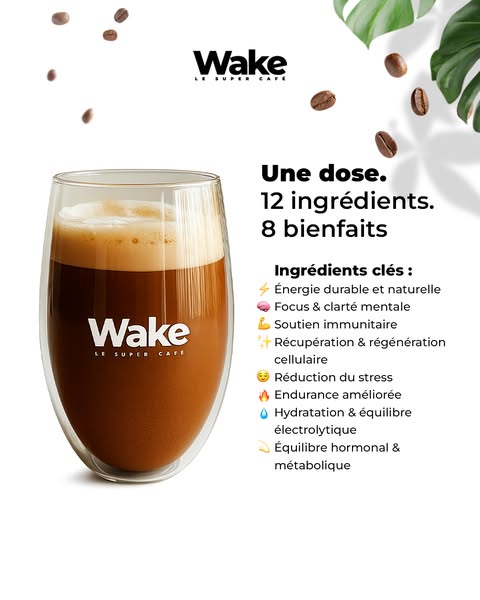
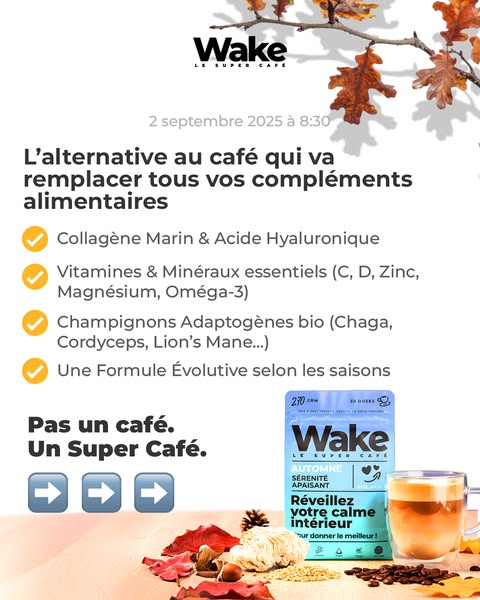
This ad showcases the Wake Le Super Cafe drink. It highlights its key ingredients and the benefits it offers, like sustained energy, mental clarity, and stress reduction.
# Brand positioning
Wake is presented as a premium, functional coffee brand that goes beyond the ordinary. Positioned as "Le Super Cafe," it suggests an elevated coffee experience with added health benefits. The brand's focus on key ingredients and specific advantages like energy, mental clarity, and stress reduction indicates a positioning against standard coffee brands that primarily offer taste and caffeine. It caters to health-conscious consumers seeking functional benefits in their daily coffee ritual, aligning with a lifestyle of well-being and performance.
# Product
Wake Le Super Cafe is presented as a coffee product designed to deliver multiple benefits in one dose. It contains 12 ingredients and offers 8 key benefits including durable and natural energy, mental focus and clarity, immune support, cellular recovery and regeneration, stress reduction, improved endurance, hydration and electrolyte balance, and hormonal and metabolic balance. The ad emphasizes functional benefits, positioning the product as more than just a caffeine source but a comprehensive beverage for overall well-being. It does not explicitly address purchase barriers, but implies value through its diverse range of health advantages, making it appealing to those seeking a convenient way to boost their daily performance and health.
# Visual style
The ad features a clean, minimalist aesthetic with a focus on product clarity. The production quality appears to be high, with studio lighting and clear product photography. Visual motifs include a clean white background, natural elements (coffee beans and monstera leaf), and a focus on text callouts. Image treatment includes color grading to enhance the coffee's richness and depth, and careful shadow placement for a natural feel. Typography is integrated in a simple, legible style. The overall style is contemporary and health-conscious.
# Hooks
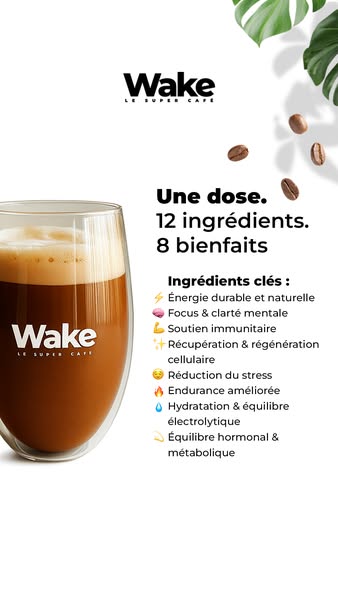
Headline: Une dose. 12 ingrédients. 8 bienfaits
# Benefits
- [object Object]
- [object Object]
- [object Object]
- [object Object]
- [object Object]
- [object Object]
- [object Object]
- [object Object]
# Features
- [object Object]
- [object Object]
- [object Object]
- [object Object]
- [object Object]
- [object Object]
- [object Object]
- [object Object]
- [object Object]
# Call to action
None used.
# Point of view
- [object Object]
# Storyline
- The ad begins with a clear display of the brand name and product, Wake Le Super Cafe, immediately establishing the brand identity and product category from the brand's perspective. This is to ensure instant recognition and sets the stage for what is to follow.
- The narrative progresses by listing key attributes such as 'Une dose. 12 ingredients. 8 bienfaits', highlighting the product's composition and value proposition from the brand's perspective. This informs the consumer about the key selling points in a concise, easy-to-understand format.
- The ad continues to list out the specific benefits associated with consuming the product from the brand's perspective, such as increased energy, focus, and stress reduction. This section aims to illustrate the functional advantages of Wake Le Super Cafe, encouraging consideration by detailing the benefits users can expect to receive.