TH

Taylor Holiday

CEO · Common Thread Co

Taylor Holiday runs Common Thread Collective, a DTC growth agency, and is best known in the creative-strategy world for picking fights with industry orthodoxy on Twitter — most notably the claim that "creative metrics" like thumb-stop and hold rate have no proven link to financial performance. He treats advertising as a systems problem: volume, ops, and context beat clever iteration on individual ads.

Distinctive beliefs, repeated across talks

How Taylor Holiday thinks about creative metrics

01

Creative metrics don't correlate to financial performance

Holiday's core contrarian position: there is no research showing thumb-stop, CTR, hold rate, or engagement have any reliable relationship to ROAS or revenue. He isn't ideologically opposed — he'd love clean creative indicators — but the burden of proof hasn't been met, and CTC's own research keeps failing to find the correlation. Most practitioners treat these metrics as self-evidently useful; he thinks that's an unexamined belief.

"Does anyone have any research that validates that 'creative metrics' like (thumb stop, CTR, engagement, etc) have ANY RELATIONSHIP to financial performance?"

"I actually am pretty agnostic to this issue. I would love for it to be true that I have clear indicators to make decisions on with creative. But I have seen no evidence for it."

"Pretty close to tossing out all language related to these measures."

02

Context beats the ad itself

The single biggest driver of ad performance isn't the creative — it's the context the ad is delivered into: who the audience is, what they already know about the brand, what's happening culturally, what offer is on the table. Marketers obsess over the asset because it feels controllable; Holiday argues the controllable lever that actually matters is the context you place around it.

"The context in which the ad exists is actually the key. It's not the ad itself."

"The context in which you are serving the ad matters."

03

Creative ops > creative strategy

Holiday argues the industry overvalues creative strategy (the thinking) and undervalues creative ops (the system for producing volume cheaply and consistently). Reaching the upper bound of a distribution of outcomes is a function of shots taken, not of cleverness per shot. The winning agencies and brands are the ones who build the pipeline.

"I think creative ops is fundamentally more important than creative strategy."

"The ability to produce a lot of ads at a cost-efficient basis in a consistent way... is the system that drives success."

04

Ad testing is mostly pseudoscience

Because the delivery environment on Meta is non-stationary and audiences aren't held constant, 'tests' between ads aren't actually tests. Asserting causality from a variable, noisy system produces false confidence and wasted spend. Iteration on a losing concept is the single biggest waste of creative resource.

"The idea that we're running tests is flawed on the basis of the variability of the environment they're delivered in."

"The idea that we could assert causality into a random thing is where we get in trouble."

"I think that's the thing that we get sucked into that I think is the biggest waste of resource."

05

Prioritize Offer, then Angle, then Audience

When deciding what to test or build creative around, the order of impact is Offer first (what you're selling and at what price), then Angle (the value proposition or story), then Audience. Most teams invert this — endlessly tweaking creative audiences or visuals while leaving the offer untouched, which is where the real leverage lives.

06

The goal is purchase, not attention

Holiday pushes back hard on the idea that getting people to watch your ad is the goal. If attention were the goal, you'd run brand awareness campaigns. The goal is to drive a purchase — and optimizing upstream signals of attention can actively mislead you about what's working.

07

Raise the standard for belief

Holiday treats the industry's casual acceptance of unvalidated claims as a discipline problem. In an era of disinformation, marketers should be explicit about what evidence would cause them to update — and demand that same burden of proof from themselves and their vendors before building process on top of a claim.

"I have continually over time tried to raise the standard for belief. Like this is a principle that I think of in life generally in an era of lots of disinformation."

"I am all for every hypothesis, Kyra, but the burden of proof for that statement is on you."

"The most important thing is to have a point of view and to be able to articulate it."

Citation-ready quotes from across the corpus

Taylor Holiday's most cited quotes

"Does anyone have any research that validates that 'creative metrics' like (thumb stop, CTR, engagement, etc) have ANY RELATIONSHIP to financial performance?"

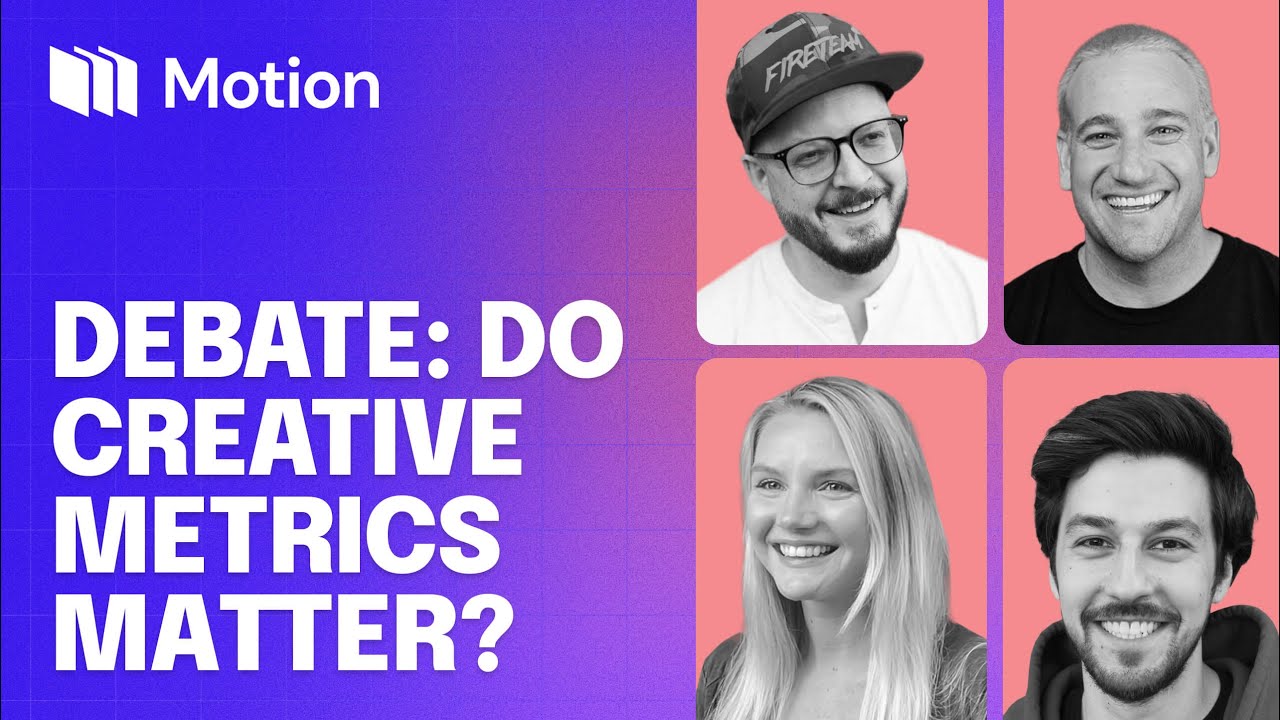
The tweet that sparked the industry-wide debate over creative metrics and the reason this panel exists.

"The context in which the ad exists is actually the key. It's not the ad itself."

His core argument for why creative metrics fail — the delivery context, not the asset, drives outcomes.

"I think creative ops is fundamentally more important than creative strategy."

Arguing that the system for producing creative volume beats the cleverness of any single idea.

"The ability to produce a lot of ads at a cost-efficient basis in a consistent way... is the system that drives success."

Following up on his creative-ops-over-strategy claim with the operational definition of what actually wins.

"The idea that we're running tests is flawed on the basis of the variability of the environment they're delivered in."

Calling out the statistical illiteracy of most ad 'testing' on Meta.

"The idea that we could assert causality into a random thing is where we get in trouble."

Why pattern-matching from dirty platform data produces false confidence.

"I am all for every hypothesis, Kyra, but the burden of proof for that statement is on you."

Refusing to accept creative-metric intuitions as default truth during a live debate.

"I actually am pretty agnostic to this issue. I would love for it to be true that I have clear indicators to make decisions on with creative. But I have seen no evidence for it."

Framing his contrarianism as evidence-driven rather than ideological.

"The most important thing is to have a point of view and to be able to articulate it."

His advice to creative strategists on what actually matters in the role.

"I think that's the thing that we get sucked into that I think is the biggest waste of resource."

On iteration — the endless tweaking of losing concepts that kills creative team productivity.

Named methodologies Taylor has introduced or articulated

Taylor Holiday's frameworks

Offer, Angle, Audience

Holiday's hierarchy for prioritizing creative development and testing. Offer (what you're selling and at what price) has the largest impact on performance, followed by Angle (the value proposition or story), then Audience (who you're selling to). Most teams invert this and burn cycles on audience and creative variants while leaving the offer — the biggest lever — untouched.

  1. Offer: what you're selling and at what price
  2. Angle: the value proposition or story
  3. Audience: who you're selling to
The framings Taylor keeps returning to

Taylor Holiday's signature questions

1 talk in Motion's library

All Taylor Holiday talks