JA

Jack Appleby

Creator · Future Social

Jack Appleby writes Future Social, a daily/weekly newsletter on social media strategy, after 15 years agency-side on brands like Beats by Dre, Twitch, Morning Brew, and Spotify. He's the guy arguing — loudly and repeatedly — that 90% of social "best practices" are noise, and that ideas and hooks are the only things that actually move content. Also runs How To Hoop Forever, a basketball account with ~200K followers that has nothing to do with marketing.

Distinctive beliefs, repeated across talks

How Jack Appleby thinks about social media strategy

01

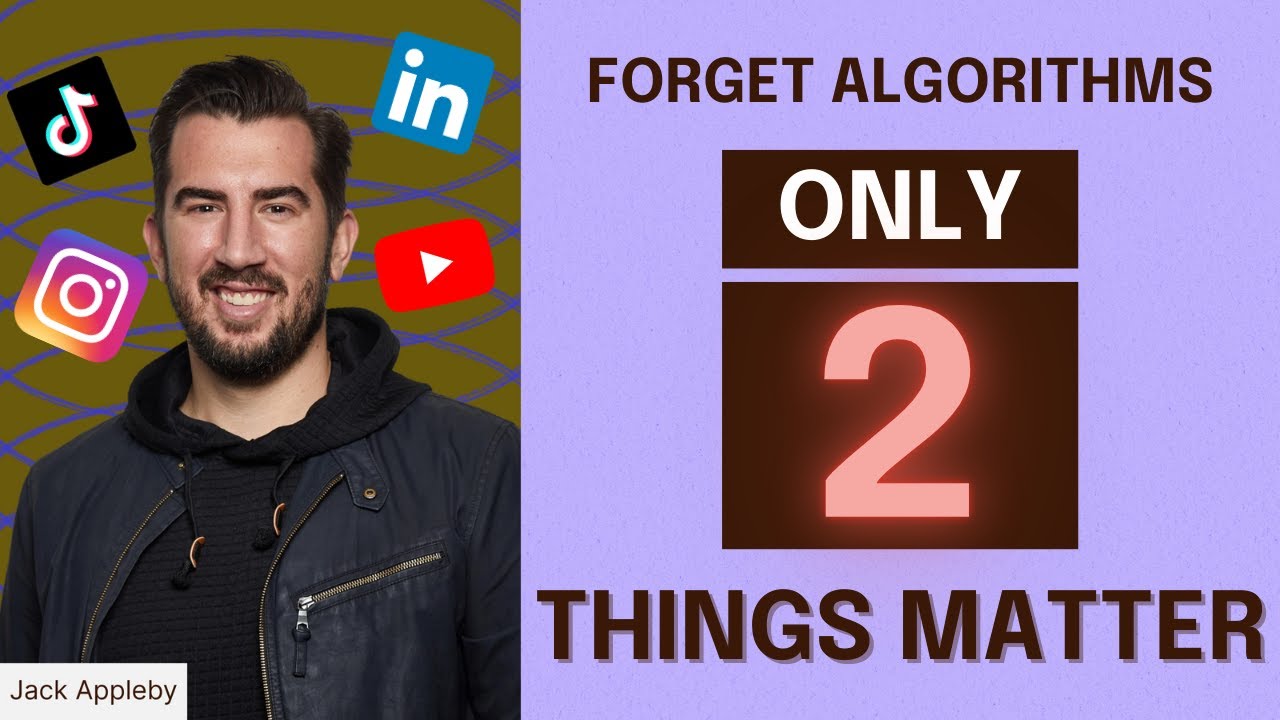
Only Two Best Practices Actually Matter

Appleby's core argument is that the social industry has been sold a pile of lies — post times, pixel sizes, hashtag counts, growth hacks — and that only two things truly drive performance: great creative ideas and great creative hooks. Everything else moves the needle by a couple percentage points at best. He thinks the fundamentals of social haven't changed across 15 years of platform churn, and that marketers keep chasing optimization theater instead of the work that compounds.

"There are only two best practices that actually matter."

"You've gotta have truly great creative ideas. And you've gotta have truly great creative hooks."

"The fundamentals of social, as many times as we've had different algorithms or platforms, the fundamentals haven't changed."

02

Emotional Benefits, Not LMAOs

Appleby pushes back hard on the industry's obsession with Gen Z laughter and meme-bait. He believes organic social has drifted away from Marketing 101 fundamentals — that products exist to make people's lives better — and that the biggest unlock for most brands is leaning into emotional benefit instead of chasing chuckles. He ties this explicitly to aging out of the "LOL phase" of marketing at 37.

"Emotional Benefits, not LMAOs."

"Fundamentally we're trying to make people's lives better with the products that we work for."

"This is something that's taught in a marketing 101 class, but it's not being integrated into modern social a lot of times."

03

Ideas Before Tactics

Appleby distinguishes sharply between tactics (text-message screenshots, handwriting overlays, format tricks) and ideas (beliefs, tensions, stories only your brand can tell). Tactics are scroll-learnable and commoditized; expert-level work comes from brainstorming full ideas with emotional resonance. He thinks most social teams skip the idea layer entirely and go straight to format-hunting.

"You need to think in ideas before you think in tactics."

"You'll have a million tactics. You can scroll and learn a bunch of tactics. But getting as good as possible at brainstorming full ideas that have real emotional resonance, that's where you become a really expert level marketer."

"We don't spend enough time thinking through ideas at the macro level or the micro level."

04

Learn From Creators, Not Competitors

Appleby rejects the standard practice of benchmarking against category competitors. He argues brands are competing for share of attention against Netflix, not against the other telcos or other sportswear brands, so inspiration should come from the creators actually winning the feed. He credits an ex-Adidas creative director for the framing.

"We're not competing with Nike, we're competing with Netflix. This is about share of attention on social."

"Learn from creators, not brands."

"When I worked in telco, I was like, I don't care what the other telecommunications companies are doing. That's not gonna help us."

05

Production Value Is Overrated; Storytelling Isn't

Appleby's go-to proof point is a TikTok he made of a screenshot of an Instagram post of a screenshot of a tweet — zero production value, hundreds of thousands of views. His claim: the story, the emotional value, and whether people can decode the concept matter far more than polish. This is why he's skeptical of the industry's reflex to throw more production budget at underperforming content.

"It's not about making perfect looking things. It's about what is the story you're telling, what does the content actually share, what's the emotional value you get from this."

"There is not one thing optimized about this, but it did several hundred thousand views because people were able to figure out what we were talking about there and that is so much more important than perfect production value."

06

You Are Paid To Have An Opinion

Appleby's advice to junior marketers is anti-deference: your job is to be an expert and show up with a point of view, regardless of hierarchy. He borrows from Ryan Tedder's songwriting practice — 50 minutes of prep, three ideas in the room — and argues the fastest way to grow is to be encyclopedic about what's working and why, then articulate it before anyone else in the room can.

"You are paid to be an expert… you are paid to be there and have an opinion."

"You don't show up to the songwriting session with nothing. You do 50 minutes of prep and you come in with three ideas."

"The best way to start having opinions is just be encyclopedic about this stuff."

07

Organic Teams Need More B-Sides

Appleby thinks paid advertisers are good at volume and iteration because they're forced to be, while organic teams chronically underproduce — treating a 12-post calendar as if it's a 12-song album with no outtakes. Drawing on his past life managing bands, he argues you need excess material, B-sides, and reps to find the winners.

"If my bands come into a studio with 12 songs to record a 12-song album, we've done something wrong. You need some B-sides, you need some additional material."

"Do the work over and over and over and over again."

Citation-ready quotes from across the corpus

Jack Appleby's most cited quotes

Named methodologies Jack has introduced or articulated

Jack Appleby's frameworks

The Only Two Best Practices

Appleby's core thesis for 2026: only two things actually move social performance — truly great creative ideas and truly great creative hooks. Everything else (post times, hashtag counts, pixel sizing, growth hacks) is noise that moves metrics a couple percentage points at best. Use it as a forcing function to stop optimizing the periphery and invest in ideation and opening seconds.

Brainstorm Based On

A four-prompt ideation framework for generating substantive social content instead of chasing trends or formats. Brainstorm from: a belief you actually hold, a tension your audience feels, a story only you can tell, and a perspective that makes them think. Designed to keep teams working at the idea level rather than the tactic level.

  1. A belief you actually hold
  2. A tension your audience feels
  3. A story only you can tell
  4. A perspective that makes them think
The framings Jack keeps returning to

Jack Appleby's signature questions

2 talks in Motion's library

All Jack Appleby talks