
# Ad summary
This ad highlights a woman's daily routine, showcasing how the Polar Loop helps her track her sleep and fitness progress. From waking up and checking her sleep score to making a smoothie, working out, and getting ready for the day, the ad emphasizes the role of the Polar Loop in her active and health-conscious lifestyle. The ad aims to show the Polar Loop’s capabilities in tracking various aspects of health and activity.
# Brand positioning
Polar Loop is presented as a companion for individuals seeking to track and improve their health and fitness. It is positioned as a tool that integrates seamlessly into a user's daily routine, providing data-driven insights to help them achieve their wellness goals. The brand promotes a lifestyle of active living, balanced nutrition, and consistent self-improvement. Polar Loop pushes against the norm of complex, intimidating fitness trackers by offering a user-friendly, motivational approach. The brand’s positioning is functional, focusing on simplicity and integration with everyday life.
# Product
The Polar Loop is a fitness tracking device designed to monitor various aspects of a user's health and activity. As shown in the ad, the Polar Loop tracks sleep patterns, including light, deep, and REM sleep, as well as interruptions. It also monitors the user's activity levels throughout the day, helping them achieve their activity goals. It works by continuously tracking the user's movements and physiological data, providing insights via a connected app. The Polar Loop is designed for anyone interested in monitoring and improving their health and fitness by providing clear, actionable data about their sleep and activity levels.
# Visual style
The ad features a mix of natural lighting and clean, modern settings, aiming for a polished yet accessible aesthetic. Editing is smooth with quick cuts between scenes. The production quality gives a polished commercial feel. Visual motifs include on-screen data overlays and the consistent presence of the Polar Loop on the woman’s wrist. The pacing is consistent, with cuts timed to the music.
# Benefits
- [object Object]
- [object Object]
# Features
- [object Object]
- [object Object]
# Call to action
None used.
# Point of view
- [object Object]
# Storyline
- 00:00–00:04 The ad opens with a woman asleep in bed.
- 00:04–00:10 The woman wakes up and checks her phone, which displays the Polar Loop app showing her sleep score and sleep analysis.
- 00:11–00:14 Following the sleep check, the woman gets out of bed and heads to the kitchen, where she prepares a smoothie, implying a focus on healthy nutrition.
- 00:14–00:17 The woman is then seen getting dressed in workout clothes, tying her hair up, and entering a gym, setting the stage for a workout session.
- 00:17–00:28 While working out, the Polar Loop tracks her activity, providing data and progress updates. The visuals of her using various gym equipment emphasize the tracking capabilities during exercise.
- 00:29–00:34 After the workout, she is shown doing her makeup and getting dressed in a blazer and putting on earrings, preparing to leave her home.
- 00:34–00:37 The ad concludes with the woman grabbing her purse and walking out the door, ready for the day, underscoring the integration of the Polar Loop into her everyday life and routine.
- 00:37–00:41 The Polar Loop logo is shown at the end.
How Polar Advertises on Meta
Refreshed 4 months ago · Weekly refresh cadence
Polar runs 27 active ads on Meta, shipping ~13 new creatives per week. Their library leans on Feature Benefit Pointout38%, Headline34%, and Product Image7%. Recently, polar is going all in on the Street X as their hero product, positioning it as the everyday versatile tracker that bridges urban life and fitness without the pro athlete pretense. They're leaning heavily into lifestyle integration and accessibility (lightweight, safety features like the LED light, military-grade durability) while running aggressive discount promos on their premium multisport lines like Vantage V3 and Grit X2 Pro to clear inventory. The through-line is democratizing fitness tracking for regular people who want something reliable that fits their whole life, not just their workouts.
Indexed by Motion's Inspo Library.
The 20 Most Recent Polar Ads on Meta
# Ad summary
This ad showcases the Polar Street X watch, highlighting its versatility and design suitable for urban, sports, and everyday use. The ad features a female athlete running on a track, interspersed with black-and-white studio shots showcasing the watch in a more relaxed setting. The watch is emphasized as a tool that simplifies tracking and monitoring, so the user can focus solely on their activity.
# Brand positioning
Polar is presented as a brand focused on empowering individuals to prioritize movement and fitness without getting bogged down by the complexities of tracking and monitoring their activities. The ad emphasizes the brand's commitment to simplifying the data-gathering process, allowing users to focus on the joy and benefits of physical activity. Polar aims to occupy a space in the consumer's mind as a facilitator of an active lifestyle, promoting simplicity and ease of use. The brand seemingly pushes against the norm of complicated fitness trackers, offering a user-friendly alternative. Its positioning leans towards functional benefits, particularly simplicity and ease of integration into various activities, rather than solely relying on emotional appeals. The Polar Street X watch is portrayed as versatile and suitable for different settings, from intense workouts to casual urban environments, thus the brand aims to appeal to a broad audience seeking a balance between functionality and style.
# Product
The Polar Street X is an urban sports watch designed to track and monitor various fitness activities with ease and efficiency. The watch is presented as a tool that removes the complexities often associated with fitness tracking, allowing users to focus solely on their movement. The watch is shown in various contexts, including running tracks and casual studio settings, suggesting its versatility for both intense workouts and everyday wear. The ad features the watch in a white colorway, although other colors (black and green) are shown at the end. The USP is its focus on streamlining fitness tracking, enabling users to concentrate on their physical activity rather than the data collection process. The ad also addresses the potential purchase barrier of complicated fitness trackers, offering a user-friendly alternative. The Polar Street X is portrayed as a reliable and stylish companion that simplifies fitness tracking so you can focus on the joy of movement.
# Visual style
The ad has a mixed aesthetic, blending polished commercial shots with a slightly raw, urban feel. The opening and action sequences are brightly lit and dynamic, emphasizing movement, while the black-and-white studio segments have a more relaxed and stylish vibe. Quick cuts and transitions create a sense of energy and rhythm, interspersed with static shots that highlight the product. The production quality feels like a hybrid, balancing professional filming with a hint of UGC rawness, which supports the intended tone of versatility and accessibility. The pacing is relatively consistent, with frequent cuts that align with the music's beat. The audio-visual sync is noticeable, particularly during the action sequences and product showcases.
# Benefits
- [object Object]
- [object Object]
- [object Object]
# Features
- [object Object]
- [object Object]
# Call to action
None used.
# Point of view
- [object Object]
# Storyline
- 00:00–00:01 00:00–00:01 The ad opens with a shot of a blonde woman running in a track with the camera focused on her movement. The ad intends to grab attention and establish the athletic context by showcasing motion from the perspective of a person walking towards her.
- 00:01–00:07 00:01–00:07 The scene transitions to a black-and-white studio setting where the same woman is dressed in a light-colored sweatsuit. The camera focuses on her wrist, highlighting the Polar watch. This is conveyed by the brand, aiming to present the watch as stylish enough to be used even outside of a sports context.
- 00:07–00:09 00:07–00:09 The woman is now on the track again wearing her sportswear. The ad seeks to re-establish the athletic setting, reinforcing the watch's primary purpose.
- 00:09–00:11 00:09–00:11 The scene is a close-up of the woman running on the track. This is conveyed by the brand and intends to re-emphasize the athletic theme.
- 00:11–00:14 00:11–00:14 It transitions to a similar shot as before, in which she poses in a black-and-white studio setting. The ad is intended to highlight the versatility of the watch for both athletic and casual wear.
- 00:14–00:16 00:14–00:16 The scene is a close-up of the woman running on the track. This is conveyed by the brand and intended to re-emphasize the athletic theme.
- 00:16–00:23 00:16–00:23 The scene transitions back to the black-and-white studio, and the woman stands against a wall. It intends to demonstrate its wearability by showcasing the watch outside of a sports context.
- 00:23–00:25 00:23–00:25 The scene goes back to the track where she runs again, and highlights the watch's purpose for fitness tracking.
- 00:25–00:32 00:25–00:32 The ad cuts to the black-and-white studio. This transition is intended to highlight the watch's versatility and broad appeal, positioning it as suitable for various activities.
- 00:32–00:38 00:32–00:38 The final shot showcases the watch in three different colors, highlighting its design and various color options. This final scene is presented by the brand in order to encourage consumer action.
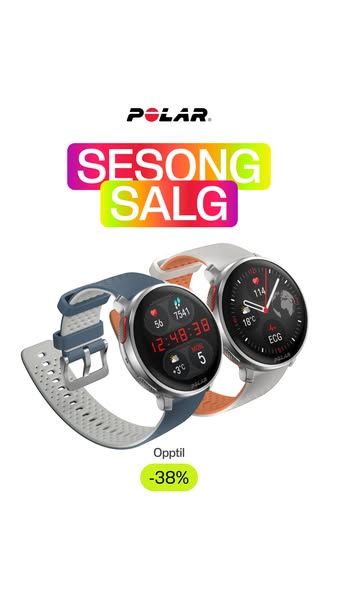
# Ad summary
This image ad is for Polar brand watches and highlights an active promotion of 38% off.
# Brand positioning
Polar is a sports watch and heart rate monitor brand. As seen in the ad, Polar smart watches are designed to display real-time health and activity metrics. The brand is likely targeting an audience interested in fitness, performance tracking, and overall health management, positioning itself in the market as a tool for athletes and health-conscious individuals.
# Product
The ad features two Polar brand smart watches with round faces and digital displays. The watch on the left has a dark gray wrist band and a silver watch face. The watch displays the time 12:48:38 in red font and several smaller metrics, including the temperature -3°C. The watch on the right has a white wrist band and silver watch face. The watch displays the time, heart rate (114), temperature (18°C), and an ECG.
# Visual style
The ad uses a clean, product-focused visual style. It features a plain white background, sharp product photography, and clear text overlays. The overall effect is a balance between informative and visually appealing.
# Hooks
Headline: SESONG
SALG
# Call to action
None used.
# Point of view
- [object Object]
# Storyline
- The ad displays two watches positioned close together on a white background. This is intended to highlight the two watch styles available.
- The ad features a promo for up to 38% off. This offer is intended to incentivize the viewer to buy the product.
# Ad summary
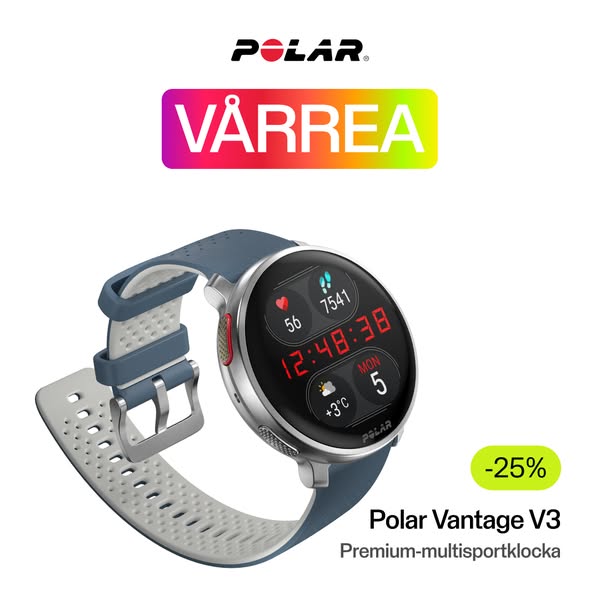
This is an image ad for Polar Vantage V3, a premium multisport watch. The ad features a discount offer and emphasizes the watch's features by displaying the time and other metrics on its screen.
# Brand positioning
Polar is presented as a leading brand in sports and fitness technology, as suggested by the advanced features of the watch and the "premium" descriptor, positioning them as a provider of high-quality, reliable equipment for athletes and fitness enthusiasts. The brand appears to align with a lifestyle focused on performance and data-driven self-improvement, evidenced by the detailed metrics displayed on the watch face.
# Product
The product featured is the Polar Vantage V3, a premium multisport watch, designed to track various fitness activities and provide detailed metrics. The watch has a round face displaying the time (12:48:38), date (MON 5), and temperature (+3°C). The screen also shows activity metrics such as steps (56) and calories burned (7541). Its strap is blue and gray with a perforated design and a silver clasp. The design suggests it is suitable for athletes and fitness enthusiasts who want to monitor their performance.
# Visual style
The ad has a clean and modern aesthetic with a focus on product clarity. The production quality appears high, with a studio-shot image and background removal. The color palette is simple, using white, blue, and gray, with pops of color from the rainbow gradient and discount badge. The typography is clean and legible, contributing to the overall scannability in feed.
# Hooks
Headline: VÅRREA
# Features
- [object Object]
# Call to action
None used.
# Point of view
- [object Object]
# Storyline
- The ad immediately shows the Polar brand logo to establish brand recognition. This serves to quickly identify the product's manufacturer for viewers already familiar with the brand from the brand's perspective.
- The image then features the word "VÅRREA" in rainbow gradient, which immediately grabs attention and signals the offer to the audience from the brand's perspective.
- Next, the product, the Polar Vantage V3, is displayed prominently. This provides a clear visual of the product and its features, such as the screen displaying time, date, and health metrics from the brand's perspective.
- Finally, the ad highlights a -25% discount and restates the product name (Polar Vantage V3), reinforcing the value proposition and product identification from the brand's perspective.
# Ad summary
This ad promotes the Polar brand of smartwatches and fitness trackers by displaying various products and their sale prices.
# Brand positioning
Polar is presented as a brand offering a range of fitness and outdoor smartwatches and pulse sensors for fitness enthusiasts. The brand is positioned as a provider of premium, high-performance wearables designed to track and enhance athletic performance and outdoor activities, appealing to users who value advanced technology and data-driven insights to optimize their training and exploration. The brand’s products offer functional benefits, such as multi-sport tracking, outdoor navigation, and heart rate monitoring, showcasing a commitment to helping users achieve their fitness goals. The brand aims to occupy a space in the consumer's mind as a reliable choice for athletes and outdoor adventurers seeking precision and durability in their wearables.
# Product
The ad showcases a variety of Polar smartwatches and pulse sensors, each designed for different fitness and outdoor activities. The Polar Vantage M3 is presented as a smart multi-sport watch. The Polar Grit X2 Pro is described as a premium outdoor watch. The Polar Vantage V3 is described as a premium multi-sport watch. Finally, the Polar H10 is featured as a pulse sensor. Each product is displayed with a discount percentage. The ad aims to show viewers the range of products offered to help them improve their performance.
# Visual style
The ad has a clean, minimalist aesthetic with a focus on showcasing the products against a white background. The editing style involves static shots with smooth transitions between products, creating a polished and professional look. The production quality is high, aligning with a commercial feel, and the pacing is moderate, allowing viewers to fully see each product and its discount. The ad maintains consistent audio-visual sync, and the visual motifs include recurring shots of the Polar logo and discount offers, reinforcing brand identity and value.
# Benefits
- [object Object]
# Features
- [object Object]
- [object Object]
- [object Object]
- [object Object]
# Call to action
None used.
# Point of view
- [object Object]
# Storyline
- 00:00–00:02 00:00–00:02 The ad begins by showcasing multiple Polar watches on a white background, set to upbeat music. The intention is to immediately display the breadth of Polar's product range, capturing the viewer's attention with visually appealing product shots.
- 00:02–00:07 00:02–00:07 The ad transitions to highlight each product individually. Specifically, the Polar Vantage M3, Polar Grit X2 Pro, and Polar Vantage V3 are displayed in this sequence. The intention is to inform viewers of the discounts available for each product.
- 00:07–00:09 00:07–00:09 The ad showcases the Polar H10 pulse sensor, continuing the focus on individual product highlights with their respective discounts, emphasizing the variety of fitness solutions available.
- 00:09–00:12 00:09–00:12 The ad concludes by displaying a final offer of up to -38%. The intention is to leave the viewer with a sense of urgency, prompting them to take advantage of the promotion.
# Ad summary
This ad shows an unboxing of the Polar Street X fitness watch. The ad begins with visuals of a building with graffiti and shows the watch box sitting on a block inside this building. A person unboxes the watch and shows the different components of the box and watch.
# Brand positioning
Polar is presented as a reliable brand that focuses on sports and fitness watches. This is implied in the product's name which is the 'Polar Street X - Urban Sports Watch'. The brand's overall visual aesthetic aligns with functionality and sports by showcasing the product in a non-traditional setting and environment. The brand and product align with active and on-the-go lifestyles by being showcased in an environment that's urban.
# Product
The Polar Street X - Urban Sports Watch is a fitness watch intended for athletic performance. The watch includes accessories such as a USB charger and additional watch bands. The watch has a black band and a circular interface where information such as time and heart rate is displayed. The watch box comes in a square and has the brand's logo as well as an image of the watch itself.
# Visual style
The ad's visual aesthetic is slightly polished, but has a raw edge. The product is being showcased in an urban environment with graffiti. The camera shots are stable and still, but still maintain a mobile feel to them. The editing style is traditional with smooth transitions. The ad's pacing is normal with the cuts syncing with the music beats.
# Benefits
- [object Object]
# Features
- [object Object]
- [object Object]
# Call to action
None used.
# Point of view
- [object Object]
# Storyline
- 00:00–00:02 00:00–00:02 An aerial shot showcases a building with graffiti all over the walls. The perspective moves into the building where the camera focuses on a product box that is sitting on a slab.
- 00:02–00:06 00:02–00:06 The camera zooms in on the product box for a clearer and closer look. A person's hands grab the box, open it and place the lid next to it.
- 00:06–00:07 00:06–00:07 The shot is a full visual of the graffiti inside the abandoned building.
- 00:07–00:11 00:07–00:11 A pair of hands reaches into the box, pulls out the watch and showcases it to the camera.
- 00:11–00:15 00:11–00:15 The person puts the watch down and grabs a USB charger and extra watch band out of the box and showcases these products as well.
- 00:15–00:19 00:15–00:19 The camera is zoomed out, fully showcasing all the products that come with the watch.

# Ad summary
This ad visualizes fitness-tracking data from a runner's app or device. It is styled as a first-person share, showing a screenshot from the user's perspective, highlighting her workout and recovery. The ad likely aims to showcase the app's ability to monitor and visualize various fitness metrics, and appeal to a health-conscious and active audience.
# Brand positioning
The brand is not explicitly mentioned in the image, but implied via its data visualization style and health-tracking metrics. It positions itself as a provider of in-depth personal fitness data and insights. The brand aligns with values of self-monitoring, athletic performance, and data-driven health management. The brand leans into the category norms of personal fitness tracking, but seeks to differentiate on the level of detail and clarity of its data visualizations. The positioning is functional, focusing on performance monitoring and insights.
# Product
The product is a fitness tracking platform, likely delivered via app or wearable device, that monitors and visualizes various health metrics. Key data points shown in the ad include: resting heart rate (61 bpm), average sleep duration (8 h 30 min), sleep quality (Poor), worst/best night sleep duration (6 h 30 min / 10 h 00 min), daily steps average (11 380), active time per day average (4 h 55 min), activity total (3 h 36 min), activity log (4 x Run), weekly distance (run) (34.5 km), stress level (Moderate), average workday (9 to 17 (8 h)), energy level (1-10) (5), HRV (67), and deep sleep average (16%). The ad conveys the product's ability to track activity, recovery, and overall physical condition, offering a comprehensive overview of the user's health. By visualizing the data, the ad addresses the purchase barrier of understanding one's physical condition and recovery, offering a clear and detailed overview.
# Visual style
The ad has a lo-fi, platform-native aesthetic. It mimics a screenshot from a fitness tracking app or device. The image treatment is minimal, with natural lighting and a casual composition. The typography is clean and simple, with a utilitarian font that suggests data visualization. The design leans into the authenticity of user-generated content. The style is designed to feel organic within a social feed, mimicking content someone might share from their fitness app.
# Hooks
Headline: OFF THE CHARTS
# Benefits
- [object Object]
- [object Object]
- [object Object]
- [object Object]
# Features
- [object Object]
- [object Object]
- [object Object]
- [object Object]
- [object Object]
- [object Object]
- [object Object]
- [object Object]
- [object Object]
- [object Object]
- [object Object]
- [object Object]
- [object Object]
- [object Object]
# Call to action
None used.
# Point of view
- [object Object]
- [object Object]
# Storyline
- The user, Kanerva, is reflecting on a busy week that included travel, celebrations, and illness, which disrupted her routine and increased stress. This is from the user's POV and sets the stage for needing to focus on recovery, reflecting a real life health situation most people can relate to.
- The user is now focusing on fast recovery and getting excited, while spending the week sorting the race fit, packing, and mentally preparing for the big day. This continues from the user's POV and sets the stage for using the fitness tracker to improve her performance.
- The ad shows a dashboard of fitness metrics, including resting heart rate, average sleep, sleep quality, daily steps, active time, activity total, weekly distance, stress, average workday, and energy level. The fitness tracker is visually communicating this data to show a comprehensive picture of the user's health and fitness, from the brand's POV.
- The ad also asks about recovery, inquiring about time to recover, causes of lack of recovery, and changes in mind and body during taper. This encourages a deeper look into the data and personal experience, from the brand's POV.
- Finally, the user reports feeling good and more motivated for the race due to fitness tracker insights. This visualizes the positive outcome of using the fitness tracker and how it improves training and motivation, from the user's POV.
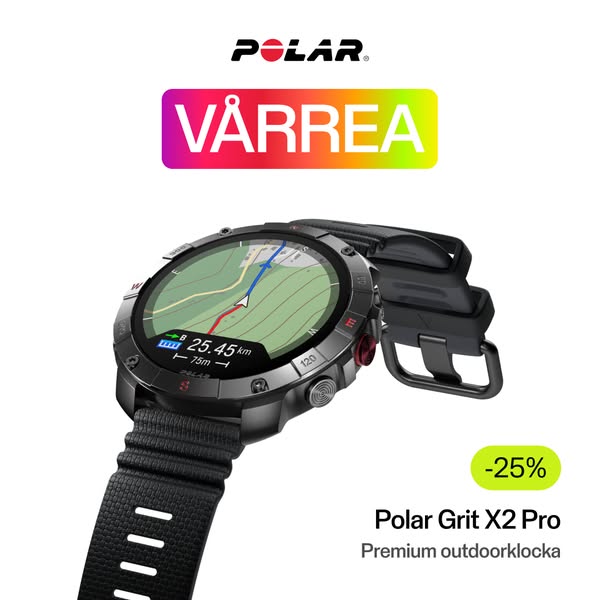
# Ad summary
This ad showcases the Polar Grit X2 Pro premium outdoor watch, highlighting its features and offering a discount.
# Brand positioning
Polar is presented as a premium brand specializing in outdoor sports watches. The brand aims to occupy the space in the consumer's mind as the go-to choice for athletes and outdoor enthusiasts who demand high performance and durability. The brand aligns with values of adventure, performance, and reliability. Polar seems to ignore any category norms, focusing instead on the functionality and performance of their products. The brand positioning is functional, highlighting the quality and reliability of its watches for outdoor activities.
# Product
The Polar Grit X2 Pro is a premium outdoor sports watch. The watch has a round face and a black wristband, with the watch face displaying a map and other metrics, such as 25.45 km and 75m. It is designed for outdoor activities, as implied by its name. The watch features a rugged design, suggesting durability and reliability in challenging environments. The watch face displays metrics that would be useful for outdoor activities, such as a map and distance traveled. The product is worth trying or buying because it is presented as a reliable and high-performance tool for outdoor adventures.
# Visual style
The ad has a clean, product-focused visual style with high production quality. The image is well-lit and sharply focused, showcasing the product in detail. The color palette is simple, with a focus on the product's black color and the colorful text elements. The typography is modern and legible. The visual style aims to highlight the product's features and create a sense of quality and reliability.
# Hooks
Headline: VÅRREA
# Benefits
- [object Object]
# Features
- [object Object]
# Call to action
None used.
# Point of view
- [object Object]
# Storyline
- The ad begins by showcasing the Polar Grit X2 Pro watch with a clear view of its display showing a map, conveying its utility for outdoor navigation. This is from the brand's perspective, intending to highlight the watch's advanced features and capabilities for outdoor activities.
- The focus then shifts to the overall product and its availability at a discounted price, indicated by the '-25%' label next to the product name. This is presented from the brand's perspective, incentivizing viewers to purchase by highlighting the value and affordability of the premium watch.
# Ad summary
This ad promotes Polar's season sale. It features different sports watches and a heart rate monitor, each displayed individually along with a discount percentage. The ad focuses on visually showcasing the products on a clean, white background with colorful accents.
# Brand positioning
Polar is presented as a brand that specializes in sports and outdoor smartwatches, and heart rate monitors. The brand emphasizes functionality and premium design, positioning itself for active individuals who prioritize tracking their performance during various activities. The ad aligns with the norm of brands in the wearable tech category, highlighting specific product features. The brand positioning is functional, focusing on the performance benefits of its devices.
# Product
The ad showcases several Polar products, including the Polar Vantage M3, described as a "Smart sportsklokke" (Smart sports watch) and the Polar Grit X2 Pro, described as a "Premium outdoor klokke" (Premium outdoor watch). Also presented is the Polar Vantage V3, described as a "Premium multisportsklokke" (Premium multisports watch) and Polar H10 "Pulssensor" (Pulse sensor). Each product is shown individually and is accompanied by a discount percentage ranging from -20% to -25%. The products are presented as tools to enhance the user's sports and outdoor activities with advanced tracking and monitoring capabilities. The ad directly addresses the purchase barrier by offering a discount, making the products more accessible. The watches are shown in various designs and colors, catering to different preferences. The pulse sensor is a red heart rate monitoring strap.
# Visual style
The ad has a clean and polished aesthetic with a white background. The editing style consists of quick cuts to showcase each product individually. The production quality is high, presenting a professional commercial feel. The pacing is fast, with cuts every 2 seconds to maintain viewer engagement. The visuals are timed to the music beats, creating a rhythmic effect.
# Benefits
- [object Object]
- [object Object]
# Features
- [object Object]
- [object Object]
- [object Object]
- [object Object]
# Call to action
None used.
# Point of view
- [object Object]
# Storyline
- 00:00–00:01 The Polar logo is displayed at the top, and the text "SESONG SALG" appears in colorful text blocks.
- 00:01–00:03 00:01–00:03: A white Polar Vantage M3 smart sports watch is displayed with the text "-25%" and "Polar Vantage M3 Smart sportsklokke" beneath it. This introduces the first product and its discount. The perspective is from the brand, showcasing the product and its value proposition.
- 00:03–00:05 00:03–00:05: A Polar Grit X2 Pro premium outdoor watch is displayed with the text "-25%" and "Polar Grit X2 Pro Premium outdoor klokke." This introduces another product with its discount and highlights its use for outdoor activities.
- 00:05–00:07 00:05–00:07: A Polar Vantage V3 premium multisports watch is displayed with the text "-25%" and "Polar Vantage V3 Premium multisportsklokke." This introduces yet another product with its discount, emphasizing its multisport functionality.
- 00:07–00:09 00:07–00:09: A Polar H10 pulse sensor is displayed with the text "-20%" and "Polar H10 Pulssensor." This introduces the final product with its discount, highlighting its role as a pulse sensor.
- 00:09–00:12 00:09–00:12: The Polar logo is displayed again, along with the text "SESONG SALG" and "Opptil -38%" (Up to -38%). This reinforces the sale event and the maximum discount available.
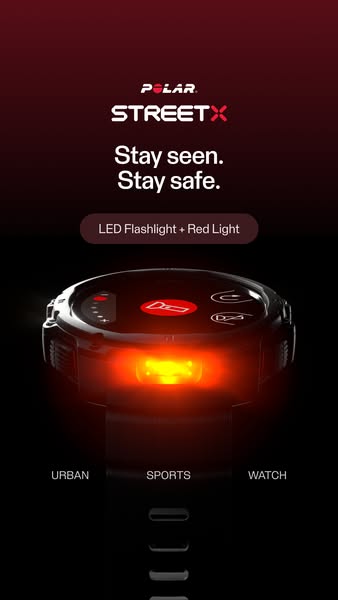
# Ad summary
This image ad showcases the Polar Street X watch, highlighting its safety features with the tagline 'Stay seen. Stay safe.' The ad emphasizes the watch's integrated LED flashlight and red light, positioning it as essential for urban and sports use.
# Brand positioning
Polar is presented as a brand committed to providing safety and visibility, particularly for individuals engaged in urban and sports activities. This brand positions itself as a provider of essential gear that ensures users are seen and safe, with a focus on integrating practical features into wearable technology. The brand emphasizes functional benefits, such as the LED flashlight and red light, appealing to consumers who prioritize safety in their active lifestyles. This approach sets Polar apart by blending technology with a safety-first mentality.
# Product
The Polar Street X is a smart watch equipped with an LED flashlight and red light, designed to enhance visibility and safety for users in urban and sports settings. The watch features multiple buttons on the face for easy control and functionality. Its USPs include the integrated safety lights that ensure the wearer is seen in low-light conditions, addressing the purchase barrier of nighttime safety concerns for runners, cyclists, and urban commuters. The watch is positioned as a crucial accessory for anyone active in environments where being seen is paramount, emphasizing its importance for both urban and sports use.
# Visual style
The ad features a minimalist and modern design with a focus on highlighting the product's key features. The dark gradient background and bright product lights create a high-contrast visual that draws attention to the watch. The typography is clean and legible, and the overall style is polished, making it suitable for in-feed placement.
# Hooks
Headline: Stay seen. Stay safe.
# Benefits
- [object Object]
- [object Object]
# Features
- [object Object]
- [object Object]
# Call to action
None used.
# Point of view
- [object Object]
# Storyline
- The ad opens with the tagline, 'Stay seen. Stay safe,' immediately establishing the core message that the product enhances visibility and safety. This sets the tone for the entire ad from the brand's perspective.
- The ad then highlights the watch's key features: 'LED Flashlight + Red Light.' This emphasizes the functional components of the watch, showcasing what makes it effective for safety, narrated from the brand's point of view.
- Finally, the ad concludes by categorizing the watch's applications with the labels 'URBAN,' 'SPORTS,' and 'WATCH,' clarifying its versatility and intended use cases. This reinforces its suitability for a wide range of activities from the brand's perspective.
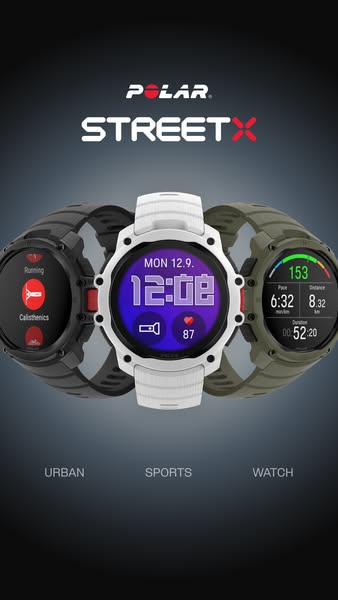
# Ad summary
This ad showcases the Polar Street X watch in three different colors, highlighting its urban, sports, and watch functionalities.
# Brand positioning
The Polar brand is positioned as a provider of high-quality sports and fitness watches. The brand emphasizes functionality and versatility, catering to both urban and sports-oriented lifestyles. The focus is on providing a technologically advanced watch suitable for various activities and environments. The brand positions itself to occupy the space of high-performance, multi-functional wearable technology that adapts to different user needs, pushing against the limitations of single-use or activity-specific wearables.
# Product
The Polar Street X watch is a versatile smartwatch designed for both urban and sports use. The watch features a digital display showing the time, date, and other metrics such as heart rate (87 BPM is displayed). The user interface on the watch allows for different modes, as shown on the black watch displaying running and calisthenics. The product is available in three colors: black, white, and green. The watch's design includes a robust casing with a ribbed band, suggesting durability and comfort during various activities. The different displays shown on the watch showcase different functionalities, highlighting its utility in both casual and active settings. The product addresses potential purchase barriers by demonstrating adaptability to different lifestyles and activities, suggesting it is a worthwhile investment for versatile use.
# Visual style
The ad features a clean and modern visual style with a focus on product presentation. The studio-shot image has a gradient background that enhances the visibility of the watches. The typography is simple and clear, ensuring readability. The image treatment includes background removal and precise lighting to highlight the details of each watch, resulting in a polished, high-design aesthetic that is easily scannable in feed.
# Hooks
Headline: POLAR STREET X
# Benefits
- [object Object]
- [object Object]
- [object Object]
- [object Object]
# Features
- [object Object]
- [object Object]
- [object Object]
- [object Object]
- [object Object]
- [object Object]
- [object Object]
- [object Object]
# Call to action
None used.
# Point of view
- [object Object]
# Storyline
- The ad begins by showcasing three Polar Street X watches in different colors (black, white, and green), each displaying different interfaces. The watches are presented as modern, versatile devices that can adapt to various activities and styles, showing the viewer that there's a color option that fits their individual preferences from the brand's perspective.
- The ad highlights the watch's functionality in both urban and sports contexts, suggesting the product is suitable for various lifestyles. This reinforces the versatility and broad appeal of the Polar Street X, letting potential customers know it can fit into their daily routines from the brand's perspective.
- The inclusion of the word "WATCH" emphasizes the product's primary function while also highlighting its additional capabilities, thus reassuring the audience of its core function and expanding into what else it can do. The brand is telling the story of the watch being multifaceted in its approach.
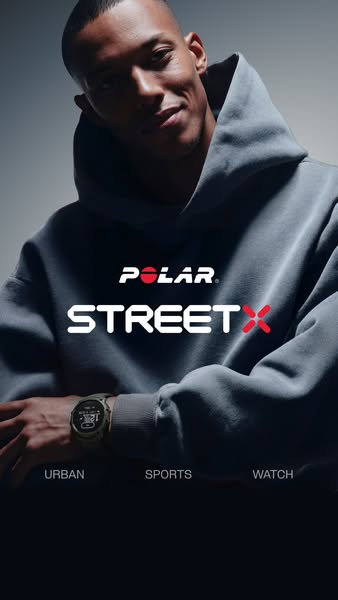
# Ad summary
This ad by Polar shows a man wearing a Polar Street X watch. The watch is being promoted for both urban and sports use.
# Brand positioning
Polar positions itself as a brand at the intersection of sports and urban lifestyles. By featuring a single model that spans both scenarios, Polar promotes itself as a brand that values versatility and seamless integration into different aspects of the consumer's life. The clean and modern design of the product further underscores the brand's commitment to functionality and style, catering to individuals who seek both performance and aesthetic appeal in their wearable technology.
# Product
The advertised product is the Polar Street X watch, a versatile smartwatch designed for both urban and sports use. This smartwatch is worn on the wrist and features a digital display showing time, date, and other metrics. The product targets individuals who seek a blend of functionality and style in their wearable technology. The Polar Street X appears to be equally suited for both intense physical activities and everyday urban wear.
# Visual style
The ad has a modern and clean visual style. The production quality is high, with professional lighting and clear imagery. The image treatment includes a subtle color grade that gives the scene a cool tone. The typography is integrated cleanly. The visual style is designed to be scannable and draw the viewer's eye to the product and its features.
# Hooks
Headline: None used
# Benefits
- [object Object]
# Features
- [object Object]
- [object Object]
- [object Object]
# Call to action
None used.
# Point of view
- [object Object]
# Storyline
- The ad shows a man in a hoodie looking down at the camera, establishing a casual and relatable feel. This aims to create a connection with the audience from the brand's POV.
- The Polar logo and "STREET X" text are displayed prominently across the hoodie. This reinforces brand recognition and positions the watch as a fusion of urban style and sports functionality, told from the brand's POV.
- The watch is highlighted on the man’s wrist, with text labels indicating that it is intended for "URBAN," "SPORTS," and "WATCH" use. This directly informs the audience about the product’s versatility, clearly communicated from the brand's POV.

# Ad summary
This image ad for Polar Street X watch emphasizes its durability and versatility. The ad showcases the product's features through an exploded view and highlights its military-grade construction. The overall design suggests a technologically advanced, rugged product.
# Brand positioning
The Polar brand, as presented in the ad, positions itself as a provider of durable, high-performance smartwatches designed for both urban and sports environments. The brand emphasizes robustness and advanced technology, suggesting a premium offering that stands up to the rigors of an active lifestyle. By highlighting military-grade durability, Polar aligns with values of reliability and resilience, targeting consumers who demand products that can withstand intense use.
# Product
The featured product is the Polar Street X smartwatch, a durable timepiece designed for versatile use. The watch is presented as having military-grade durability, and is implied to be suitable for both urban and sports environments. The ad uses an exploded view to showcase the watch’s construction, highlighting its robust build. The overall presentation suggests that the watch is engineered for impact resistance and long-lasting performance, making it a reliable choice for active individuals who need a device that can withstand harsh conditions.
# Visual style
The ad features a technologically advanced and rugged aesthetic. The production quality is high, with a studio-shot image that highlights the product's construction through an exploded view. The visual motif includes a focus on texture, with the black and gray gradient background emphasizing the product's details. The image treatment involves precise lighting and subtle shadows to create depth. The typography is integrated cleanly, with bold text that reinforces the message of durability. The ad contrasts with typical lifestyle-focused watch ads, opting instead for a product-centric approach that showcases engineering and robustness, potentially enhancing stop power in the feed.
# Hooks
Headline: Braced for impact.
# Benefits
- [object Object]
# Features
- [object Object]
# Call to action
None used.
# Point of view
- [object Object]
# Storyline
- The ad begins by showcasing the Polar Street X watch, emphasizing its name and brand through the logo at the top. The intent is to immediately identify the product and brand to the viewer. This is told from the brand's perspective.
- Next, the ad features the tagline "Braced for impact," immediately communicating the watch's durability and resilience. This highlights a key feature of the product, positioning it as a robust and reliable choice. This is communicated from the brand's perspective.
- The inclusion of the phrase "Military-Grade Durability" reinforces the watch's toughness and high-quality construction. This is presented to build confidence in the product's ability to withstand harsh conditions. This is from the brand's perspective.
- The image transitions to an exploded view of the watch components, showcasing its intricate design and robust build. This helps to visualize the quality and engineering behind the product, emphasizing its durability and precision. This is shown from the brand's perspective.
- Finally, the ad labels the watch as suitable for "URBAN," "SPORTS," and general "WATCH" use, highlighting its versatility and adaptability to various lifestyles and activities. This aims to broaden the product's appeal by showcasing its suitability for different environments. This is from the brand's perspective.
# Ad summary
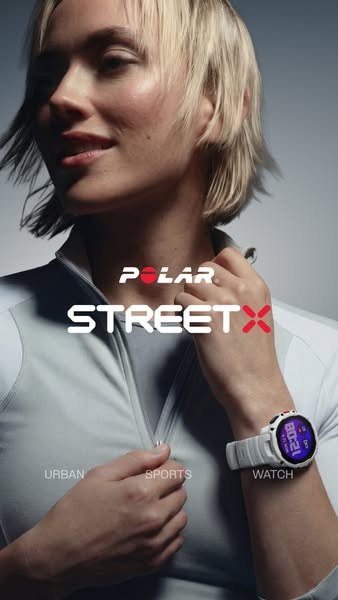
This ad for the Polar Street X watch features a white woman in athletic apparel, highlighting the watch's versatility for both urban and sports environments. The brand logo and product name are centrally displayed, emphasizing the watch's modern design and functionality.
# Brand positioning
Polar is presented as a brand synonymous with innovation and cutting-edge wearable technology, specifically catered to sports enthusiasts and active individuals. The brand aims to occupy the space of high-performance and reliability, offering products designed to enhance athletic performance and provide comprehensive data insights. By focusing on both urban and sports environments, Polar positions itself as a versatile choice, capable of seamlessly integrating into diverse lifestyles. The brand aligns with values of health, fitness, and technological advancement. It ignores traditional limitations, by positioning itself for both casual and intense use. The brand positioning is both functional (providing tools for better performance) and emotional (promoting a sense of empowerment and achievement).
# Product
The Polar Street X is a versatile smartwatch designed for both urban and sports use. It features a modern design with a white band and casing, complemented by a vibrant display showing time and data. It is explicitly shown to be for active individuals who engage in both urban lifestyle and sports activities. The ad emphasizes its adaptability, indicating it is suitable for various occasions. The highlighted USPs are its dual functionality for urban and sports environments, as suggested by the overlaid labels. The watch is presented as a solution for individuals seeking a single device that can seamlessly transition between different activities, eliminating the need for separate devices for different use cases. Its adaptability and stylish design make it a worthwhile purchase.
# Visual style
The ad features a clean and modern visual style with a focus on the product and the active lifestyle it complements. The production quality appears to be studio-shot with professional lighting and subtle retouching. A grid layout is suggested by the placement of text labels, 'URBAN,' 'SPORTS,' and 'WATCH.' The image treatment includes soft lighting, subtle color grading, and background removal to emphasize the subject. The typography integration is large and bold, enhancing scannability. The style aims to present the product as both functional and fashionable, fitting seamlessly into a modern, active lifestyle, which enhances stop power in feed.
# Hooks
Headline: None used
# Benefits
- [object Object]
# Features
- [object Object]
# Call to action
None used.
# Point of view
- [object Object]
- [object Object]
# Storyline
- The image showcases a woman wearing the Polar Street X watch, emphasizing its sleek design and fit for an active lifestyle. The intention is to highlight the watch's aesthetic appeal and seamless integration into everyday wear, from the brand's perspective.
- The labels 'URBAN,' 'SPORTS,' and 'WATCH' are overlaid on the image, directly associating the Polar Street X with these environments. The intention is to clearly position the product as versatile and suitable for both urban and sports activities, told from the brand's perspective.
- The woman is shown adjusting her athletic apparel, indicating preparedness for physical activity. This moment is included to reinforce the watch's suitability for sports, conveying the idea that it seamlessly integrates into an active lifestyle. This is seen from the perspective of a potential customer.
# Ad summary
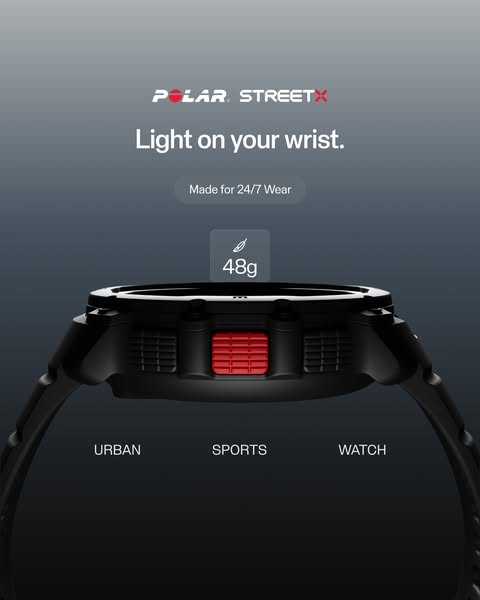
This image ad showcases the Polar Street X watch and highlights its lightweight design and suitability for urban, sports, and everyday wear.
# Brand positioning
Polar is presented as a modern, innovative brand focused on wearable technology for active lifestyles. The emphasis on 'Light on your wrist' suggests a commitment to comfort and practicality, positioning Polar as a provider of high-performance devices that integrate seamlessly into daily life. The brand appeals to consumers who value both functionality and style in their tech accessories, whether for urban exploration, sports activities, or general use.
# Product
The product is the Polar Street X watch, designed for urban, sports, and everyday use. It is presented as being lightweight, weighing only 48g, making it comfortable for all-day, every-day wear. The watch features a sporty, modern design with a prominent red button accent. The watch is made for 24/7 wear. It targets active individuals seeking a versatile and lightweight wearable.
# Visual style
The ad has a clean, modern, and minimalist visual style. The product is centrally focused with a shallow depth of field. The gradient background adds a subtle depth. The typography is simple and legible. The color palette is limited to shades of gray, black, and a pop of red, creating a sleek and professional aesthetic. The overall impression is one of understated sophistication and functional design.
# Hooks
Headline: Light on your wrist.
# Benefits
- [object Object]
- [object Object]
# Features
- [object Object]
- [object Object]
# Call to action
None used.
# Point of view
- [object Object]
# Storyline
- The ad starts by introducing the Polar Street X watch and highlighting its key benefit: being 'Light on your wrist.' This aims to immediately capture the viewer's attention by emphasizing comfort and ease of wear, from the brand’s perspective.
- The storyline then reinforces this benefit by stating 'Made for 24/7 Wear,' suggesting the watch is designed for continuous use without causing discomfort. This aims to reassure potential customers that the watch is suitable for all-day wear and various activities, from the brand’s perspective.
- The ad emphasizes the weight of the product, which is 48g. This aims to highlight one of the watch's functional qualities, from the brand’s perspective.
- The labels 'URBAN,' 'SPORTS,' and 'WATCH' suggest the watch's versatility and suitability for different settings and activities. This aims to broaden the appeal of the watch to a wider audience by emphasizing its adaptability and usefulness in various contexts, from the brand’s perspective.
# Ad summary
A UGC-style ad showcasing the Polar Street X fitness watch. The creator begins by expressing her emotional attachment to her current fitness watch, the Polar Grit X2. She then unboxes the Polar Street X, highlighting its snow-white color and urban chic design. She also demonstrates the watch's flashlight feature and encourages viewers to check the caption for more details.
# Brand positioning
Polar is presented as a brand that understands the emotional connection people have with their fitness watches, which serve as training companions and data trackers. The brand's positioning suggests a blend of functionality and style, offering watches that not only perform well but also complement the user's personal style. Polar watches are positioned as suitable for dedicated athletes and fashion-conscious individuals, pushing against the norm that fitness watches should be strictly utilitarian and unappealing. By highlighting the snow white color and urban chic design of the Polar Street X, the brand appeals to consumers who want a device that fits seamlessly into both their active and everyday lives, embracing emotional and functional value.
# Product
The Polar Street X is an urban sports watch designed for individuals who want a blend of style and functionality. It is portrayed as a replacement for the creator's current fitness watch, the Polar Grit X2. The white color adds a chic, modern aesthetic. The product features include data tracking, displayed via the homescreen, and a built-in flashlight. The creator emphasizes the watch's funky and urban chic design, suggesting it's for users who want a device that complements their style and training needs. A key selling point is its urban chic aesthetic and flashlight feature, designed for the fashion-forward fitness enthusiast.
# Visual style
The ad has a UGC-style aesthetic with a polished feel. The lighting is natural, and the production quality is high, giving a casual and friendly tone. The video uses quick cuts to maintain a consistent pace with the creator's speech. The audio-visual sync is smooth.
# Benefits
- [object Object]
- [object Object]
- [object Object]
# Features
- [object Object]
- [object Object]
- [object Object]
- [object Object]
# Call to action
Check the caption.
# Point of view
- [object Object]
# Storyline
- 00:00–00:05 The creator begins by stating that it's an emotional day because she's changing fitness watches.
- 00:05–00:12 She expresses that many people get emotionally attached to their fitness watches.
- 00:13–00:25 She mentions her current fitness watch, the Polar Grit X2, and emphasizes its sentimental value by mentioning that it has been with her through the training for her first two marathons, plus a half marathon.
- 00:25–00:28 She reveals that she is changing to the Polar Street X fitness watch.
- 00:28–00:31 She showcases the snow white color of the Polar Street X and highlights its packaging.
- 00:31–00:36 The creator unboxes the watch and shows its screen.
- 00:37–00:44 She displays the watch's home screen and highlights its urban chic design.
- 00:44–00:47 She puts the Polar Street X on her wrist, showing the audience what it looks like.
- 00:47–00:50 She demonstrates the flashlight feature of the watch.
- 00:51–00:54 She directs the audience to the caption for more details about the Polar Street X.

# Ad summary
This image ad for the fragrance "OFF THE GRID/05" features the product's container against a light background. The ad is highly stylized and uses a visual design that is reminiscent of a barcode.
# Brand positioning
This ad presents 'OFF THE GRID/05' as a premium fragrance that seeks to blend harmoniously with the wearer's individuality, rather than dominating it. The brand seems to value subtlety and integration, promoting the idea of a scent that enhances personal essence. The brand seemingly positions itself as an alternative to more overpowering or conventional fragrances, aiming for a more understated and sophisticated olfactory experience.
# Product
This ad is for the fragrance 'OFF THE GRID/05'. The container appears to be cylindrical, possibly made of glass or a similar transparent material, with vertical lines creating a texture or design. The brand and product name are prominently displayed on the container in a stylized font that mimics a barcode pattern. The fragrance is presented in a minimalist fashion, with the packaging itself being the focal point.
# Visual style
The visual style of the ad is minimalist and highly stylized. The production quality appears to be high, with a focus on clean lines, neutral color palettes, and a unique typographic treatment that mimics a barcode. The image treatment includes background removal and a flat color application. The overall effect is modern and sophisticated, aiming to stand out through understated design rather than bold or flashy elements.
# Hooks
Headline: None used
# Benefits
- [object Object]
# Features
- [object Object]
# Call to action
None used.
# Point of view
- [object Object]
# Storyline
- The ad presents the product and its packaging in a stylized manner. The intention is to highlight its design. The perspective is from the brand.
# Ad summary
A person wearing a Polar Street X watch is doing various exercises in a modern gym. A voiceover talks about how he is proud of the viewer for all the work they put in, even on days when they don't feel like it. The ad suggests you don't need something built for professionals, you just need something that keeps up with every step, every day.
# Brand positioning
Polar Street X is presented as a reliable and supportive brand that understands the challenges of maintaining a consistent workout routine. It positions itself as a companion for everyday athletes, acknowledging their efforts and dedication. The brand aims to occupy a space that isn't exclusive to professionals but rather caters to individuals who strive to improve and stay active. It promotes values of perseverance and self-appreciation.
# Product
The Polar Street X watch is advertised as a versatile and durable urban sports watch designed to keep up with the user's daily activities and workouts. The ad addresses the potential purchase barrier of users believing they need professional-grade equipment. Instead, the watch is positioned as a reliable companion for everyday routines, emphasizing its ability to support users through their fitness journey without being overly specialized. The watch shown has a digital watch face with a black and white display and a gray wristband. The ad shows that the watch can display workout metrics such as heart rate, calories burned, and time elapsed. The ad presents the Polar Street X as a companion that keeps up with every step, every day.
# Visual style
The ad has a modern and polished aesthetic, with a focus on clean lines and a muted color palette. The video uses a combination of quick cuts and static shots to create a sense of energy and movement, with the cuts timed to match the music's rhythm. The production quality appears high, suggesting a professional commercial style. Visual motifs include close-up shots of the product and the user, emphasizing the watch's features and the user's active lifestyle. The pacing is fast, with numerous cuts per minute to maintain viewer engagement.
# Benefits
- [object Object]
- [object Object]
# Features
- [object Object]
# Call to action
None used.
# Point of view
- [object Object]
# Storyline
- 00:00–00:01 A man is running on a treadmill in a modern gym.
- 00:01–00:04 00:01–00:04: A man is sitting on a wooden box in a dark room. The man puts his sleeves on the Polar Street X watch. A man says he is proud of the viewer. This message is intended to convey personal support.
- 00:04–00:09 00:04–00:09: A man is sitting on a wooden box looking tired. A man says that he has been with the viewer on the days they nearly didn't go, but they laced up anyway. This message is intended to show empathy and encouragement.
- 00:09–00:15 00:09–00:15: A man is squatting down. A man says he has been with the viewer during the hour after work when nobody was watching. The man follows this up by saying yeah, that's my favorite. This is a message of recognizing the effort of the viewer when nobody else is around.
- 00:16–00:24 00:16–00:24: A man is doing various exercises in the gym. A man says you don't need something built for professionals, you just need something that keeps up with every step, every day. This is a message showing the reliability of the watch for the everyday athlete.
- 00:24–00:37 00:24–00:37: Quick cuts of the man using the watch and exercising in the gym.
- 00:37–00:43 00:37–00:43: The Polar Street X watch is shown in three different colors against a gray background with the Polar logo.
# Ad summary
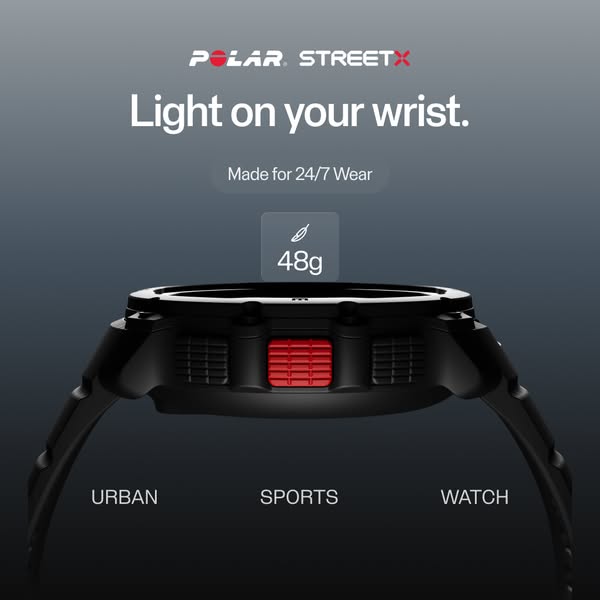
This image ad highlights a Polar Street X watch by emphasizing its lightweight design and suitability for urban, sports, and everyday wear.
# Brand positioning
Polar is presented as a modern brand focused on seamlessly integrating technology into an active lifestyle. The brand emphasizes practicality and durability, designed to withstand daily wear. Positioning itself at the intersection of urban style and athletic performance, Polar aims to be a versatile choice for consumers. Its lightweight design suggests an ease of use and comfort, appealing to those who value convenience and functionality.
# Product
The featured product is the Polar Street X watch, engineered for 24/7 wear and weighing only 48g. Its design caters to versatile use, fitting seamlessly into urban, sports, and everyday settings. The watch is presented as an accessory that doesn't weigh you down. It aims to eliminate the barrier of discomfort or bulkiness typically associated with wearable tech. This makes it an appealing choice for individuals who want a device that enhances their active lifestyle without being intrusive.
# Visual style
The ad uses a clean, modern aesthetic with a focus on product features. The dark color scheme and product spotlighting create a sleek, tech-forward feel. The use of text callouts directly on the image helps highlight key attributes.
# Hooks
Headline: Light on your wrist.
# Benefits
- [object Object]
# Features
- [object Object]
- [object Object]
# Call to action
None used.
# Point of view
- [object Object]
# Storyline
- The ad begins with the brand name to introduce or reinforce brand recognition. It serves to capture initial attention and to ensure viewers know which product line is being showcased. The story begins from the brand's perspective.
- The headline, "Light on your wrist," immediately highlights the primary benefit of the watch. It is intended to resonate with viewers who may be put off by bulky or heavy wearables. This part of the story is delivered from the brand's perspective.
- The copy "Made for 24/7 Wear" emphasizes the watch's suitability for continuous use. It assures potential buyers that the device is comfortable and durable enough for all-day, everyday wear. This part of the story is told by the brand.
- A graphic displaying the weight of "48g" offers concrete proof of its lightweight design. It seeks to further minimize any perception of bulkiness. The story is being delivered by the brand, supporting its prior claims.
- The words "URBAN," "SPORTS," and "WATCH" categorize the watch's versatility and multiple use cases. It highlights its ability to fit into various lifestyles. The story is from the brand, reinforcing the product's adaptability.
# Ad summary
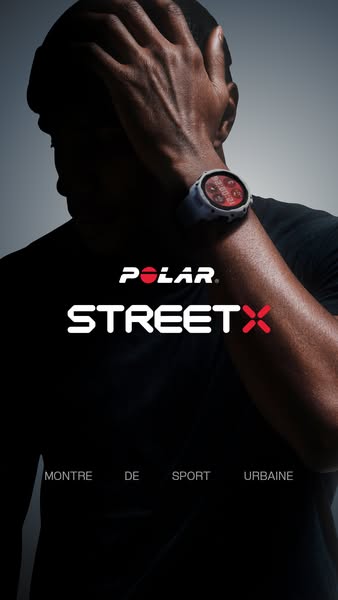
This ad shows a close-up of the Polar STREET X watch on a model with the Polar brand and product name.
# Brand positioning
Polar is presented as a brand that caters to athletes and those interested in sports, specifically those who engage in urban sports, based on the name of the watch. The brand values a focus on athletic performance and a commitment to helping urban athletes track and improve their fitness. The positioning is both functional (providing tools for tracking fitness) and aspirational (aligning with an active, athletic lifestyle).
# Product
The Polar STREET X is a sports watch designed for athletes who engage in urban sports. The watch is white with a red screen. The ad does not explicitly state features, ingredients, or design details other than the appearance. The main selling point is the watch's association with athletic performance and urban sports.
# Visual style
The ad features a studio-shot image with a focus on high-quality production. The visual motif is a close-up of the product on a model, creating a sense of intimacy and personal connection. The image treatment includes dim lighting, background removal, and color grading to enhance the product's visibility. The typography is large and bold, drawing attention to the brand and product name. The style is meant to be high-design, with a focus on athletic.
# Hooks
Headline: None used
# Benefits
- [object Object]
# Features
- [object Object]
# Call to action
None used.
# Point of view
- [object Object]
# Storyline
- The image captures a close-up of a person wearing the Polar STREET X watch. The intent is to showcase the watch as a functional and stylish accessory for urban athletes. The audience experiences the scene from the perspective of a potential buyer, seeing the watch in action on an active individual.
How Other Sports & Fitness Brands Advertise on Meta
Peer brands in Motion's library — click any brand to see their creative strategy, live ads, and AI breakdowns.